
Solar Generation Guide: How Many Units Does 1kW Produce in Tamil Nadu?
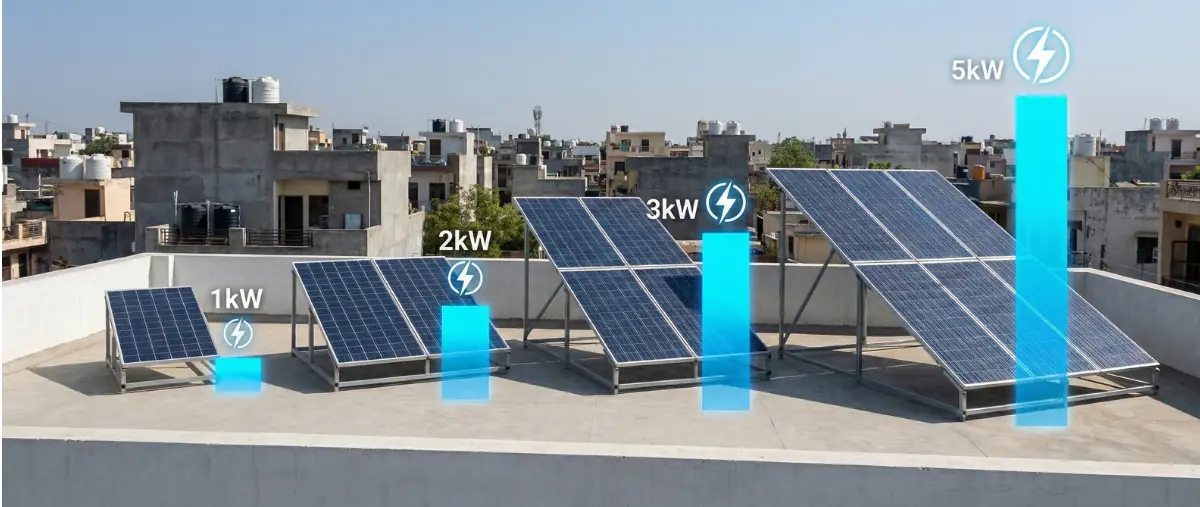
Tamil Nadu is blessed with some of the highest solar irradiation levels in India, making it a goldmine for rooftop solar power. For homeowners in Cuddalore, Panruti, Neyveli, and Puducherry, understanding exactly how much power a system generates is the first step towards energy independence.
The most common question we get is: "How many units will a 1kW, 3kW, or 5kW system produce per day?" The answer depends on your location, panel efficiency, and roof orientation. At Surya’s Solar, we use high-efficiency Mono PERC and N-Type TOPCon panels to ensure you get the maximum output from every ray of sunshine. This guide provides a detailed breakdown of what you can expect from different system sizes in 2025.
Quick Answer Table (Solar Generation in TN)
Here is a snapshot of what you can expect from different system sizes in Tamil Nadu. These numbers are based on real-world data from our installations in Cuddalore and surrounding districts.
| System Size | Daily Units (Avg) | Monthly Units (Avg) | Yearly Units (Avg) | Ideal Bill Range |
|---|---|---|---|---|
| 1 kW | 4 – 5 units | 120 – 150 units | 1,400 – 1,650 units | < ₹1,000 |
| 2 kW | 8 – 10 units | 240 – 300 units | 2,800 – 3,300 units | ₹1,000 – ₹1,800 |
| 3 kW | 12 – 14 units | 360 – 420 units | 4,200 – 5,000 units | ₹1,500 – ₹2,500 |
| 5 kW | 20 – 22 units | 600 – 660 units | 7,200 – 8,000 units | ₹2,500 – ₹4,500 |
Why Tamil Nadu Generates High Solar Power
Our state is geographically positioned for peak solar performance. We are close to the equator, which means the sun is directly overhead for most of the year.
- Strong Sunlight: We receive 300+ sunny days a year. Even during the monsoon, the diffuse light is often enough to generate 30-40% of peak capacity.
- High Irradiation: The South Indian belt has high solar intensity (approx 5-6 kWh/m²/day).
- Dry Heat Advantage: Areas like Panruti and Neyveli have dry heat, which is better for generation than humid heat. Solar panels lose efficiency as they get hotter, but dry air helps dissipate heat better than humid air.
- Optimal Angles: Most rooftops in TN allow for an ideal 10–15° south-facing tilt, which captures the maximum sunlight throughout the day.
Detailed Breakdown: Units Generated by Each System
Let's dive deeper into each capacity to help you understand which one fits your needs.
1 kW Solar System – How Many Units?
- Daily: 4–5 units
- Monthly: 120–150 units
- Yearly: 1,400–1,650 units
- What it runs: LED lights, ceiling fans, a TV, and mobile charging. It cannot run an AC or heavy motor.
- Best For: Small homes with bills below ₹1,000. It's a good entry-level system but offers limited savings.
2 kW Solar System – How Many Units?
- Daily: 8–10 units
- Monthly: 240–300 units
- Yearly: 2,800–3,300 units
- What it runs: All of the above + a refrigerator and a washing machine (during the day).
- Best For: Families of 2-3 members with bills around ₹1,000–₹1,800. It covers the base load of a typical middle-class home.
3 kW Solar System – How Many Units? (Most Popular)
- Daily: 12–14 units
- Monthly: 360–420 units
- Yearly: 4,200–5,000 units
- What it runs: All of the above + a 1.5-ton AC (for 4-5 hours) + a water pump (0.5 HP).
- Best For: The standard choice for a 2BHK home with a family of 4. Fits bills of ₹1,500–₹2,500. It provides the perfect balance of cost and savings.
5 kW Solar System – How Many Units? (Best Value)
- Daily: 20–22 units
- Monthly: 600–660 units
- Yearly: 7,200–8,000 units
- What it runs: Multiple ACs, geysers, heavy motors, and all household appliances.
- Best For: Large families with bills of ₹2,500–₹4,000. It offers the best ROI because you export a lot of power to the grid, building up credit for rainy days.
District-wise Generation Variations
Not all sunshine is equal. Here's how generation varies across our service regions based on local climate data.
| Region | Daily Units/kW | Reason |
|---|---|---|
| Panruti / Neyveli | 4.8 – 5.2 | Dry heat + clear skies boost efficiency. These are the best generation zones. |
| Cuddalore | 4.5 – 4.8 | Coastal humidity and moderate dust slightly reduce output compared to inland areas. |
| Puducherry | 4.3 – 4.7 | High humidity and salt mist affect performance slightly. Regular cleaning is needed here. |
| Chennai | 4.0 – 4.6 | Urban pollution and humidity can lower generation. |
| Coimbatore | 4.4 – 4.8 | Balanced weather provides consistent output throughout the year. |
Seasonal Impact on Generation
Solar generation isn't constant. It follows a curve throughout the year.
- Summer (Mar–Jun): Peak generation. You will see the highest numbers on your net meter. However, extreme heat (above 40°C) can slightly reduce panel voltage.
- Monsoon (Jul–Sep): Cloudy days will cause a dip. Generation might drop to 40-60% on heavy rain days. But remember, rain also cleans your panels!
- Winter (Oct–Feb): This is the "Goldilocks" zone. Clear skies and cooler temperatures often lead to very stable and highly efficient generation.
Factors That Affect Units Generated
Why does my neighbor generate more than me? Here are the 5 key factors.
- Shading: This is the #1 enemy. Even a small shadow from a tree branch, water tank, or neighboring building can drop output by 30% or more.
- Panel Efficiency: We install Mono PERC and Bifacial panels. These perform significantly better in low light and high heat compared to older Poly panels.
- Orientation & Tilt: South-facing is best. East/West facing panels lose about 10-15% generation. The tilt angle should match your latitude (approx 10-13 degrees for our region).
- Dust & Maintenance: A dirty panel produces 15-25% less power. In dusty areas like Neyveli, cleaning every 2 weeks is essential.
- Temperature: Solar panels actually hate extreme heat. They work best in bright but cool conditions. This is why generation is often better in January than in May.
Check Your Solar Generation for Your Home in Tamil Nadu
Use our Solar Calculator to estimate daily units, monthly savings, and ROI for any system size.
Solar Savings Calculator Tamil Nadu
Calculate your potential savings with precision
Enter amount between ₹2,000 and ₹30,000 • We specialize in 3 kW+ systems
1kW vs 2kW vs 3kW vs 5kW - Which Should You Choose?
Making the right choice depends on your goals.
- Choose 1kW: If you just want to offset basic lighting loads and have a very small budget.
- Choose 2kW: If you live in a small 1BHK apartment (top floor) and use AC very rarely.
- Choose 3kW: The standard for a 2BHK home with a family of 4. This is the "safe bet" for most.
- Choose 5kW: If you have a 3BHK+, use ACs daily, run a home office, or plan to buy an EV. This offers the fastest payback.
Example Real-Life Bills
See the difference solar makes with real numbers.
Example 1: 3kW System in Cuddalore
- Daily Avg: 13 units
- Monthly Generation: ~390 units
- Consumption: 450 units
- Net Billable: 450 - 390 = 60 units.
- Result: The bill drops from approx ₹2,200 to just ₹150 (fixed charges). Savings: ~93%.
Example 2: 5kW System in Puducherry
- Daily Avg: 20 units
- Monthly Generation: ~600 units
- Consumption: 550 units
- Net Billable: 550 - 600 = -50 units.
- Result: The bill is Zero. The homeowner earns a credit of 50 units, which carries forward to the next month to offset higher usage in summer.
Related Solar Guides
For the next step, compare your estimated savings with our Solar Savings Calculator, review the 3kW solar system with subsidy, and book a free site visit for a roof-specific quote.
Need Help Choosing the Right Solar System Size?
Surya’s Solar provides free rooftop assessment across Tamil Nadu & Puducherry to calculate your generation and savings accurately. We use advanced software to predict your exact output.
Get a Free Rooftop Assessment
Our engineers will visit your site, analyze shadow-free area, and provide a detailed solar report.
Book Free AssessmentFrequently Asked Questions
How many units does 1kW solar produce in Tamil Nadu?
How many units does a 3kW solar system generate?
Why is my solar generation lower than expected?
Does solar generation drop during monsoon?
Tags
Ready to Switch to Solar?
Get a customized solar solution for your home. Save up to 90% on electricity bills!
- Free Site Visit
- Govt. Subsidy Support
- 25 Years Warranty